
How to Start an Online Coaching Business in 2026: Complete Guide


If you want to start online coaching business 2026 with realistic expectations, this guide walks through the actual costs, timeline, and strategies that work—not the hype most articles sell. Traditional degrees matter less. Skills matter more.
If you have expertise in anything—language learning, career transitions, exam prep, financial literacy—there’s a real market for personalized coaching in 2026. The online coaching software market is projected to hit $9.6 billion by 2033, growing at 12.1% annually.
But here’s what most guides won’t tell you: starting an online coaching business in 2026 isn’t a fast-money strategy. It takes 6-12 months of consistent work before most coaches see reliable income.
This guide walks through the actual steps, realistic costs, and financial planning required to start online coaching business 2026 with a foundation built for long-term sustainability—not just quick launches that fail in month three.
What Changed in Online Coaching by 2026
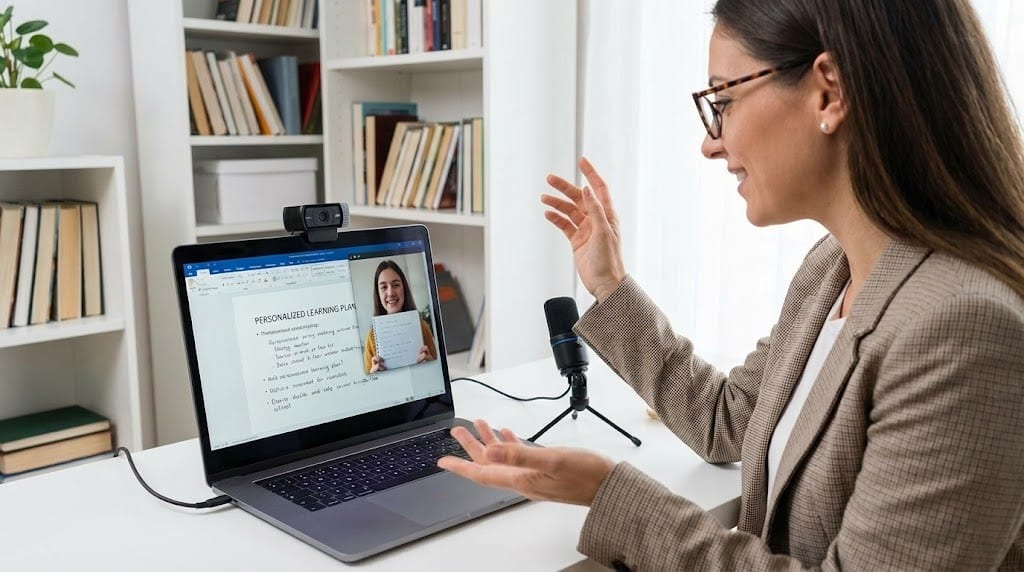
The coaching space shifted from recorded courses to live interaction. Students don’t just want information anymore—they want accountability, feedback, and someone who notices when they’re stuck.
AI tools handle the basics now. ChatGPT can explain concepts. YouTube has every tutorial imaginable.
What AI can’t do is read a student’s frustration during a live session, adjust the lesson on the fly, or provide the emotional support that keeps someone going when progress feels slow.
That’s why human-led coaching isn’t going away. It’s becoming more valuable, not less—but only for coaches who understand they’re selling transformation, not information.
Quick Summary
- Live coaching is growing because AI can’t replicate empathy or real-time adaptation
- The market values personalization and accountability over generic content
- Most profitable niches solve urgent, painful problems for people willing to pay
The Real Numbers: What Online Coaching Actually Costs
Most articles skip this part. Here’s what you actually need to start online coaching business 2026 with a professional setup:
Minimum Startup Budget (First 3 Months)
| Expense Category | Low-End Option | Mid-Range Option | Notes |
|---|---|---|---|
| Platform/Software | $0 (free tools) | $50-200/month | Readymade solutions vs. DIY |
| Website/Landing Page | $0-15/month | $30-50/month | Basic hosting + domain |
| Video Conferencing | $0 (Zoom free) | $15-20/month | Paid tier for longer sessions |
| Payment Processing | 2.9% + $0.30/transaction | Same | Stripe, PayPal fees |
| Marketing (Ads) | $0 (organic only) | $200-500/month | Optional for faster traction |
| Total Monthly | $0-50 | $300-800 | Scales with growth |
Most coaches can start for under $100/month if they’re willing to handle scheduling manually and use free tools initially. The mid-range budget ($300-800/month) lets you automate more and focus on teaching rather than administration.
The bigger cost isn’t money—it’s time. Expect to invest 10-15 hours per week for the first 3-6 months before you see consistent bookings.
What Most Coaches Underestimate
Marketing takes longer than you think. Most coaches assume “build it and they’ll come.” They don’t.
You’ll need 2-4 months of consistent content creation, networking, or paid ads before bookings become predictable. Budget for that runway, both financially and mentally.
Step 1: Choose Your Coaching Niche (The Decision That Determines Everything)
Your niche determines your pricing, marketing strategy, and whether you’ll have enough demand to build a sustainable business.
The most profitable niches sit where three things overlap:
- You have genuine expertise (not just interest)
- There’s urgent demand (people actively searching for help)
- The audience can afford coaching rates ($50-300+ per session)
High-Demand Coaching Niches in 2026
| Niche Category | Specific Examples | Why It’s Growing | Avg. Session Rate |
|---|---|---|---|
| Professional Skills | AI literacy, prompt engineering, workflow automation | Job market anxiety, need for 10x productivity | $100-250 |
| Career Transitions | B2B sales training, executive communication, leadership coaching | Career stagnation, promotion barriers | $150-400 |
| Academic/Exam Prep | Law school prep, medical licensing, CPA exam coaching | High-stakes career entry, low margin for error | $75-200 |
| Language Learning | Business English, technical Spanish, professional writing | Globalized work, cross-border communication | $40-120 |
| Financial Literacy | Debt reduction strategy, basic investing, budget optimization | Financial anxiety, lack of formal education | $80-200 |
Red Flags: Niches to Avoid
Some niches sound good but have serious problems:
- Oversaturated markets (general life coaching, basic fitness) where you’re competing on price alone
- Vague outcomes (“mindset coaching,” “manifestation”) that make it hard to prove results
- Low-paying audiences (high school tutoring in saturated markets) unless you can handle high volume
If you can’t clearly articulate what specific problem you solve and who has that problem right now, your niche isn’t focused enough.
Quick Summary
- Profitable niches solve urgent problems for audiences who can pay
- Avoid oversaturated or vague coaching categories
- Test demand before committing: search Google, check competitors’ pricing, ask in communities
Step 2: Validate Demand Before Building Anything
Here’s the mistake most new coaches make: they spend months building a perfect website, setting up automation, creating lead magnets—then discover no one actually wants what they’re selling.
Validate first. Build second.
No-Cost Validation Method (2-4 Weeks)
- Post 3-5 pieces of content in your niche (LinkedIn articles, YouTube videos, Reddit comments in relevant communities)
- Offer 3 free “beta sessions” to ideal clients in exchange for detailed feedback
- Track engagement: Are people asking questions? Sharing your content? Reaching out for paid help?
If you can’t get 3 people interested in free coaching, you won’t get paying clients. Fix your messaging or niche before moving forward.
Paid Validation (Faster but Requires Budget)
Run $100-200 in Facebook or Google ads to a simple landing page offering a free 20-minute consultation. If you can’t generate at least 5-10 leads from that spend, your offer or targeting needs work.
This step saves you months of wasted effort. Skip it at your own risk.
Step 3: Structure Your Coaching Programs
Pricing is where most coaches either undervalue themselves or scare everyone away. Here’s how to think about it clearly.
Three Pricing Models That Work
1. Hourly Sessions ($50-300/hour depending on niche and experience)
- Best for: New coaches testing the market
- Pros: Easy to start, flexible
- Cons: Income caps at your available hours
2. Package Deals (Example: 4 sessions for $500, 8 sessions for $900)
- Best for: Coaches with proven results
- Pros: Higher commitment from clients, predictable revenue
- Cons: Requires clear outcome promise
3. Monthly Retainers ($500-2,000/month for ongoing access)
- Best for: Executive coaching, business strategy
- Pros: Stable recurring revenue
- Cons: Demands consistent availability and results
Starter Pricing Framework
If you’re new and have no testimonials:
- Start at $50-75/session for the first 5-10 clients
- Raise to $100-125 once you have 3-5 solid testimonials
- Increase 15-20% every 6 months as demand grows
Don’t price based on what you think you’re worth. Price based on what your market will pay, then increase as you prove results.
What to Include in Each Session
- Pre-session prep form (5-10 minutes for client to complete)
- 45-60 minute live session
- Session recording (if client wants it)
- Follow-up email with action steps
- Between-session support via email or messaging (set clear boundaries: 1-2 questions max between sessions)
Quick Summary
- Start with hourly pricing if you’re new; move to packages as you gain traction
- Price based on market research, not self-worth
- Increase rates gradually as testimonials and demand grow
Step 4: Choose the Right Platform to Start Online Coaching Business 2026
This is where coaches waste the most money. You have three real options to start online coaching business 2026, each with different cost and complexity trade-offs.
Option 1: Manual Setup (Free – $50/month)
Use separate free tools for each function:
- Scheduling: Calendly (free tier)
- Video: Zoom (free tier, 40-min limit) or Google Meet
- Payments: PayPal or Stripe payment links
- Client management: Google Sheets or Notion
Best for: Solo coaches just starting who don’t mind manual work
Real cost: Your time. You’ll spend 5-10 hours/week on admin tasks that could be automated.
Option 2: All-in-One Platforms ($30-100/month)
Tools like Acuity Scheduling, Thinkific, or Teachable bundle scheduling, payments, and basic video.
Best for: Coaches who want to focus on teaching, not tech
Hidden limitation: Most don’t include built-in video conferencing or white-labeling, so your brand looks generic.
Option 3: Readymade Marketplace Software ($200-500 one-time or $50-200/month)
Platforms like Yo!Coach, LearnWorlds, or custom marketplace solutions give you everything: scheduling, video, payments, admin dashboards, multi-coach support.
Best for: Coaches planning to scale to a multi-coach marketplace or who want a professional brand from day one
Trade-off: Higher upfront cost, but saves hundreds of hours in setup and integration.
Comparison: Platform Costs Over 12 Months
| Approach | Month 1 Cost | 12-Month Total | Time Investment |
|---|---|---|---|
| Manual Setup | $0 | $0-600 | 240+ hours |
| All-in-One | $30-100 | $360-1,200 | 40-60 hours |
| Readymade Marketplace | $200-500 (one-time) or $50-200/month | $200-2,900 | 10-20 hours |
Which Platform Should You Choose to Start Online Coaching Business 2026?
- If you’re testing the idea and unsure if coaching will work: Manual Setup
- If you’re committed but want to stay lean: All-in-One Platform
- If you plan to add other coaches or scale quickly: Readymade Marketplace
The biggest mistake is over-investing in technology before validating demand. Start simple. Upgrade when bookings exceed your manual capacity.
Quick Summary
- Manual setups save money but cost time
- All-in-one platforms balance cost and convenience
- Marketplace software makes sense only if scaling to multiple coaches
- Start lean, upgrade when demand justifies it
Step 5: Set Up Payment Processing and Revenue Structure
This is where trust either builds or breaks. Students need to feel confident their payment is secure, and you need to get paid reliably without surprise fees.
Payment Gateway Options
Stripe (2.9% + $0.30 per transaction)
- Best for: U.S.-based coaches
- Pros: Fast setup, works globally, automatic invoicing
- Cons: Higher fees for international transactions
PayPal (2.9% + $0.30, slightly higher for international)
- Best for: International coaches or students
- Pros: Trusted brand, easy refunds
- Cons: Occasional account holds, customer service issues
Wise (formerly TransferWise) (0.5-2% depending on currency)
- Best for: Coaches working across currencies
- Pros: Low international fees
- Cons: Slower setup, less familiar to U.S. students
Set Clear Refund Policies Before You Launch
Most coaches avoid this conversation until there’s a problem. Set expectations up front:
- No refunds after session #1 (students can cancel before that with full refund)
- Pro-rated refunds for package deals if canceled mid-way
- 24-hour cancellation policy (late cancellations = session still charged)
Put this in writing on your booking page and confirmation emails. It protects both you and the student.
Revenue Diversification Strategy
Relying only on 1:1 sessions caps your income. Here’s a realistic timeline for adding revenue streams:
Months 1-6: Focus entirely on 1:1 sessions. Build testimonials and case studies.
Months 6-12: Add group coaching (4-8 students, same topic, lower per-person rate but higher total revenue).
Months 12+: Consider selling recorded courses, templates, or paid communities for passive income.
Don’t try to do everything at once. Master one revenue stream before adding the next.
Money-Saving Checklist for New Coaches
Here’s how to keep costs under $200/month while still looking professional:
- ☑ Use free Calendly + Zoom for first 3 months
- ☑ Skip paid ads until you’ve validated your offer organically
- ☑ Use Canva (free) for all graphics and social media posts
- ☑ Buy domain + basic hosting only ($15-30/month total via Namecheap or Bluehost)
- ☑ Write your own content (blog posts, LinkedIn articles) instead of hiring writers
- ☑ Use Google Workspace (free tier) for email and file storage
- ☑ Start with manual invoicing via PayPal or Stripe links—skip subscription billing software
Total saved: $300-500/month compared to “recommended” coaching stacks.
Upgrade each tool only when it becomes a bottleneck (e.g., upgrade Zoom when you hit the 40-minute limit regularly, upgrade Calendly when you need more booking flexibility).
Step 6: Marketing Strategies to Start Online Coaching Business 2026 on a Budget
Most coaches lose money on ads because they start paid marketing before they understand their audience. Here’s the order that actually works.
Phase 1: Organic Validation (Months 1-3, $0 Spent)
Your goal: Get your first 5-10 paying clients without ads.
LinkedIn Strategy (20 min/day)
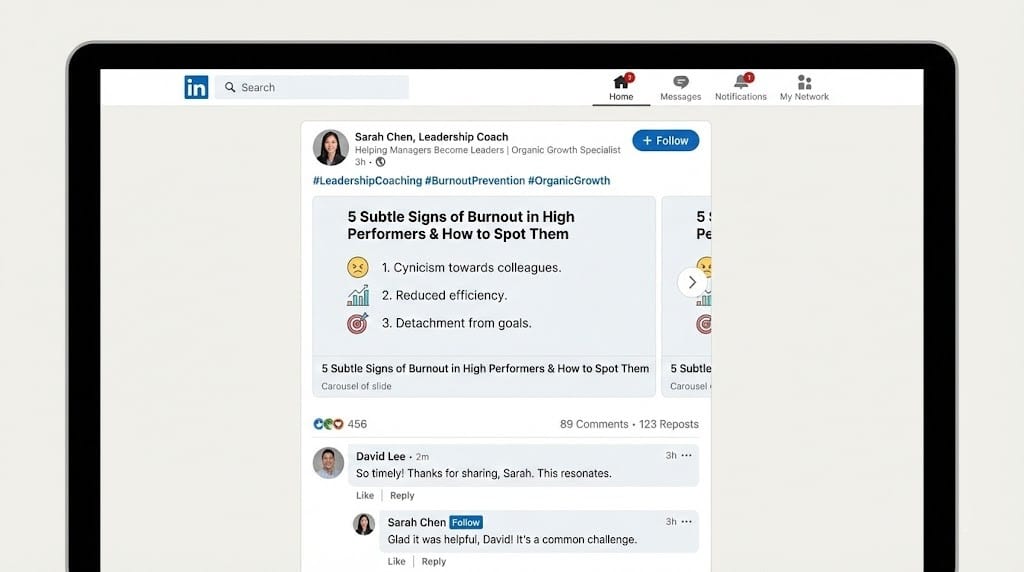
- Post 3-4x/week about specific problems you solve
- Comment thoughtfully on 5-10 posts daily in your niche
- Send 3-5 personalized connection requests per day to ideal clients
- Do NOT pitch in DMs—offer value first, build trust, let them ask about coaching
YouTube Strategy (1 video/week)
- Create 5-10 minute “answer videos” for common questions in your niche
- Use simple screen recording (free tools: OBS, Loom)
- Focus on search-friendly titles: “How to [solve specific problem] in [timeframe]”
Community-Based Marketing (15 min/day)
- Join 3-5 relevant subreddits, Facebook groups, or Discord servers
- Answer 2-3 questions daily with genuinely helpful responses (no pitching)
- Include a subtle link to your website or booking page in your bio/signature
This phase takes 2-4 months to generate consistent leads, but it’s free and builds real trust.
Phase 2: Low-Budget Paid Ads (Months 4-6, $200-500 Total)
Once you have testimonials and know your messaging works, test small ad budgets.
Facebook/Instagram Ads ($5-10/day for 30 days)
- Target: Specific interest groups related to your niche
- Offer: Free 15-minute strategy session or downloadable guide
- Goal: Collect 20-30 leads, convert 3-5 into paying clients
Google Search Ads ($10-15/day for 30 days)
- Target: High-intent keywords like “career coach near me” or “[specific niche] tutoring”
- Offer: Book a free consultation
- Goal: Test which keywords convert at lowest cost
Stop any ad that doesn’t generate at least 1 lead per $20 spent. Iterate messaging, targeting, or offer until it works.
Phase 3: Referral System (Months 6+)
Once you have 10-15 happy clients, ask for referrals:
- Offer $25-50 credit for every referred client who books
- Send a simple email template they can forward to friends
- Make it easy (include your booking link, one-sentence description of what you do)
Referrals have the highest close rate (50-70%) because trust is already built.
What NOT to Do in Marketing
- Don’t buy courses promising “6-figure coaching business in 90 days”—most are affiliates selling the dream, not the reality
- Don’t spend $1,000+ on a website before validating demand
- Don’t hire a “social media manager” in your first 6 months—you need to understand what resonates first
- Don’t post generic motivational quotes—they don’t book sessions
Quick Summary
- Start organic: LinkedIn, YouTube, community engagement
- Add small paid ad budgets only after organic validation
- Build referral systems once you have 10+ satisfied clients
- Most failed coaches quit before month 4—stay consistent
Who Should NOT Start an Online Coaching Business in 2026
This matters. Coaching isn’t for everyone, and starting when you shouldn’t sets you up for frustration and financial loss.
Skip coaching if:
- You don’t have 10-15 hours per week to invest for the first 6 months. Coaching requires consistent client acquisition, session delivery, and content creation. There’s no shortcut.
- You need income in the next 30-60 days. Coaching takes 3-6 months to generate reliable revenue. If you’re financially tight, get a part-time job first and build coaching on the side.
- You can’t handle rejection or slow growth. Most coaches send 50-100 messages, posts, or ads before getting their first paying client. If that sounds discouraging, this isn’t the right path.
- You’re not willing to show up live. Recorded courses are saturated. The value in 2026 is live interaction. If you want passive income only, coaching isn’t it.
- You don’t have a specific, painful problem you solve. “Life coaching” or “helping people be their best” won’t cut it. You need a niche with urgent demand.
Practical Financial Tools: Coaching Business Budget Template
Here’s a copy-paste budget framework for your first 6 months. Adjust based on your niche and location.
Startup Costs (One-Time)
| Item | Low-End | Mid-Range | High-End |
|---|---|---|---|
| Domain + Hosting | $15 | $50 | $100 |
| Logo/Branding | $0 (Canva) | $50 (Fiverr) | $500 (pro designer) |
| Platform Setup | $0 (manual) | $200 | $500 |
| Total Startup | $15 | $300 | $1,100 |
Monthly Operating Costs (First 6 Months)
| Item | Low-End | Mid-Range | High-End |
|---|---|---|---|
| Software (scheduling, video, CRM) | $0 | $50 | $150 |
| Marketing (ads, content tools) | $0 | $200 | $500 |
| Payment processing (2.9% of revenue) | Variable | Variable | Variable |
| Total Monthly | $0 | $250 | $650 |
Revenue Projections (Conservative)
| Month | Sessions/Week | Avg. Rate | Monthly Revenue |
|---|---|---|---|
| 1-2 | 0-2 | $75 | $0-600 |
| 3-4 | 3-5 | $75 | $900-1,500 |
| 5-6 | 6-10 | $100 | $2,400-4,000 |
Break-even timeline: Most coaches break even (revenue exceeds costs) around month 4-5 if they stay consistent.
What to track weekly:
- Leads generated (target: 5-10/week)
- Consultation-to-booking conversion rate (target: 30-50%)
- Revenue per session (should increase over time)
- Hours spent on non-revenue activities (should decrease as you automate)
Step-by-Step Revenue Growth Plan
Follow this sequence to start online coaching business 2026 with realistic expectations:
Months 1-2: Foundation Phase
- Validate niche with 3-5 free beta sessions
- Set up basic booking and payment system (manual is fine)
- Create 1-2 pieces of organic content per week
- Target: $0-600 revenue (treat this as learning phase)
Months 3-4: Traction Phase
- Launch low-budget paid ads ($200 total test)
- Refine messaging based on what’s converting
- Aim for 3-5 sessions per week
- Target: $900-1,500 revenue
Months 5-6: Scaling Phase
- Increase session rate by 20-30%
- Introduce package deals (4-8 session bundles)
- Build referral system with existing clients
- Target: $2,400-4,000 revenue
Months 7-12: Stabilization Phase
- Add group coaching or recorded content
- Hire VA for admin tasks (if revenue supports it)
- Focus on retention over acquisition
- Target: $4,000-8,000/month
Critical: Revenue won’t climb linearly. Some months will be flat or down. This is normal. The trend matters, not individual months.
Realistic Expectations: What Success Actually Looks Like
Most coaching content sells a fantasy. Here’s the reality.
Year 1 Benchmarks for “Successful” Coaches:
- 10-15 consistent clients
- $3,000-6,000/month revenue
- 15-20 hours/week working (10-12 hours coaching, 5-8 hours admin/marketing)
That’s not “6-figure freedom.” It’s a solid part-time income or modest full-time income, depending on your location and expenses.
Year 2 Benchmarks (if you keep going):
- 20-30 clients (mix of 1:1 and group)
- $6,000-12,000/month revenue
- 25-30 hours/week (mostly coaching, less admin as you automate)
Most coaches quit in months 3-6 when results feel slow. The ones who make it to year 2 often build sustainable 5-figure monthly income.
The question isn’t “Can I make money coaching?” It’s “Am I willing to work consistently for 6-12 months before seeing meaningful results?”
Quick Summary
- Expect 4-6 months before reliable income
- Year 1 target: $3,000-6,000/month, not 6 figures
- Most coaches quit too early—consistency matters more than tactics
- Scale slowly: master 1:1 sessions before adding complexity
Alternative Paths: When Coaching Isn’t the Right Fit
If the timeline or workload above sounds unrealistic for your situation, consider these alternatives:
1. Consulting Instead of Coaching
- Sell outcomes (deliverables, reports, strategies) instead of ongoing sessions
- Higher rates ($150-500+/hour) but more project-based
- Better for: People with deep expertise who prefer finite engagements
2. Course Creation (Not Live Coaching)
- Record once, sell repeatedly
- Lower per-sale revenue but more scalable
- Better for: Topics with clear, repeatable processes (not personalized)
3. Corporate Training
- Sell group sessions to companies instead of individuals
- Higher revenue per hour, less marketing needed
- Better for: B2B topics like leadership, sales, productivity
Each has trade-offs. Coaching works best when you enjoy live interaction and want recurring client relationships.
Conclusion
Starting an online coaching business in 2026 isn’t a get-rich-quick plan. It’s a 6-12 month process that requires specific expertise, consistent marketing, and enough financial runway to handle slow early growth.
The coaches who succeed treat this like a real business—validating demand, controlling costs, tracking metrics, and improving their offer based on feedback.
If you have genuine expertise, can commit 10-15 hours per week, and have the patience to build slowly, online coaching offers real potential for sustainable income. Just don’t believe the hype that promises overnight success.
The market is there. The demand is real. The question is whether you’re willing to do the work that most coaches quit before finishing.

