
Using a Personal Loan to Clear $15k+ Credit Card Debt: Fixed Rates, Math, and Discipline Risks
⚠️ Admin-only note — delete this box before publishing.
| Marker | Alt (EN) | Alt (KR) | Gemini Image Prompt |
|---|---|---|---|
| IMAGE-2 | Illustration of a loan checklist including origination fees, interest rates, and monthly budget terms. | 대출 수수료, 이자율, 월별 예산 조건을 포함한 대출 체크리스트 일러스트레이션. | An elegant, minimal flat design illustration showing a financial evaluation checklist with icons representing fixed rates, fee structures, and calendar payment dates. Clean desk surface context, high contrast, professional corporate style, no written text. |
Featured Image
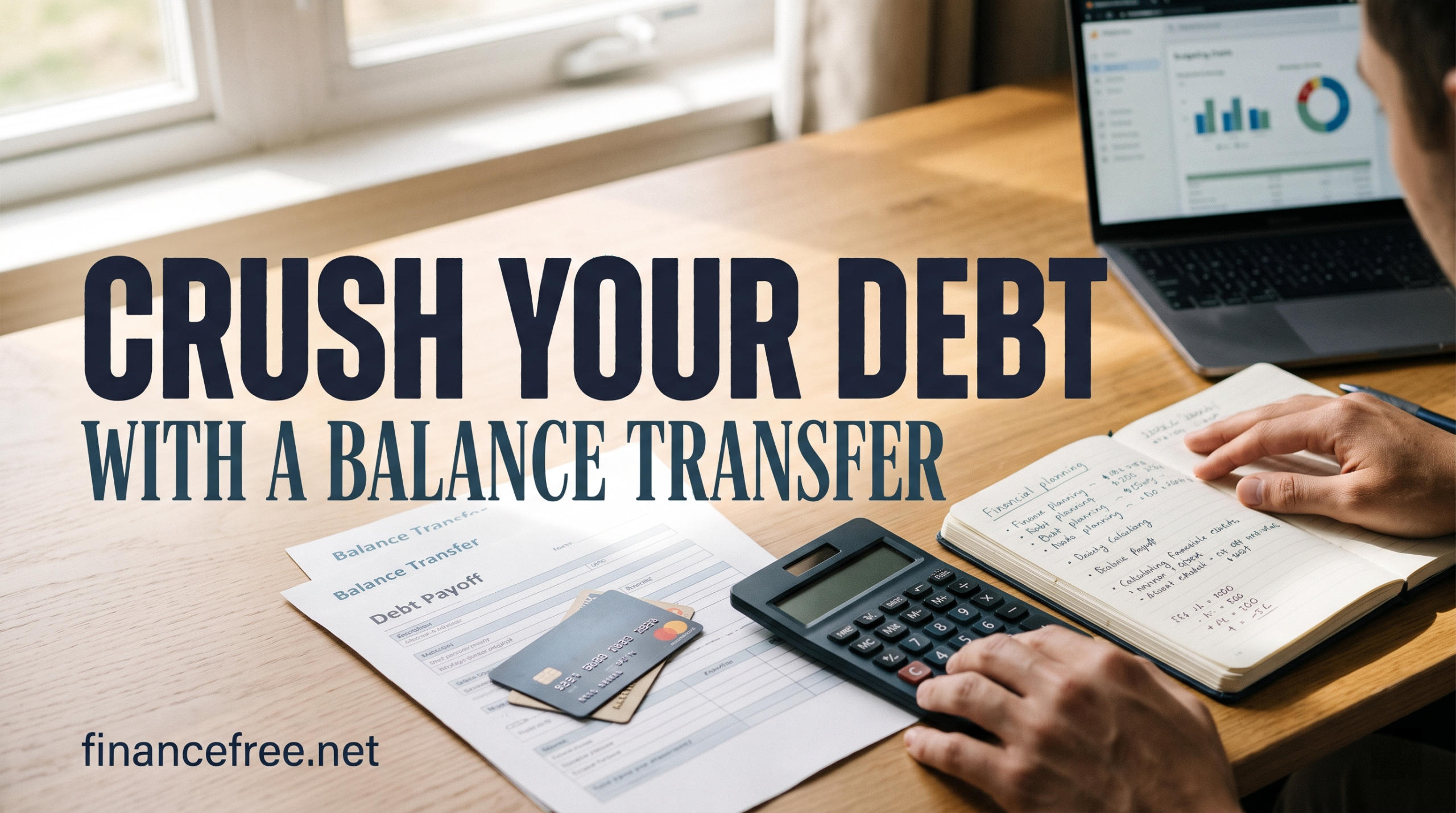
Prompt: A warm, high-quality editorial financial photograph showing a clean wooden desk with a calculator, notebook, and balance transfer sheets. Modern, uncluttered aesthetic, soft natural sunlight, professional financial blog hero image style, no text or brand logos.
Alt (EN): A organized desk featuring financial planning tools for managing credit card payoff strategies.
Alt (KR): 신용카드 상환 전략을 관리하기 위한 재무 계획 도구가 정리된 책상.
Description: Hero banner visual depicting structured financial decision-making for clearing debt. / 부채 상환을 위한 체계적인 재무 의사결정을 묘사하는 히어로 배너 이미지.
Using a personal loan to pay off credit card debt works well if you secure an APR at least 5% lower than your current credit card rates. It consolidates multiple payments into one fixed monthly bill with a clear end date. However, this strategy backfires if you continue spending on the cleared cards or take on a loan with heavy origination fees.
Not for you if your credit score is below 640, as high personal loan interest rates will eliminate any potential savings. It is also not suitable if you have not addressed the underlying spending habits that created the balances in the first place.
Fixed Loan Rates vs. Variable Card APR: The Math Breakdown
Credit cards use variable interest rates that compound daily. When card issuers raise interest rates, your monthly finance charges increase automatically. This structure makes long-term credit card repayment unpredictable and expensive.
A personal loan offers an amortized, fixed interest rate. Your monthly payment remains identical from the first installment to the last. Every dollar you pay is divided strictly between principal reduction and fixed interest charges.
Consider a practical example with a $15,000 total credit card balance across three cards. Assume the average variable APR across these cards is 22%. If you pay $450 per month toward these cards, it will take roughly 52 months to clear the balance.
During those 52 months, you will pay approximately $8,100 in interest alone. This brings your total payout to $23,100. Furthermore, any rate increase by the card issuer extends this timeline automatically.
Now look at a fixed personal loan alternative. Suppose you pre-qualify for a $15,000 personal loan at an 11% fixed APR with a 36-month term. Your fixed monthly payment will be $491.
Over the 36-month loan term, you will pay $2,676 in total interest. Comparing the two options shows clear potential savings. The fixed loan saves over $5,400 in total interest while wiping out the debt 16 months faster.
The math strongly favors personal loans when you qualify for lower fixed rates. However, the interest rate difference must be large enough to offset initial loan processing costs.
Quick Summary
- Credit cards compound interest daily with variable rates that can fluctuate at any time.
- Personal loans lock in a fixed interest rate and set a precise repayment end date.
- A 10% drop in interest rate can save thousands of dollars on a $15,000 debt balance.
The Core Operational Risk: Freed-Up Credit Line Discipline
The biggest threat to successful consolidation is not mathematical. It is psychological. Consolidating credit card balance into a loan resets your card balances back to zero.
Zero balances create a false sense of financial freedom. If you leave those cards open and begin using them for daily spending, you risk compounding your debt. You would then owe both the monthly personal loan payment and new card bills.
This scenario leads directly to financial distress. To prevent this, you must change how you manage your cards immediately after the loan funds arrive.
Do not close your oldest credit card accounts immediately. Closing long-standing credit accounts shortens your credit history length. It also reduces your total available credit, which increases your credit utilization ratio and lowers your credit score.
Instead, remove the physical cards from your wallet. Unlink the card numbers from online shopping portals and digital wallets. Keep the accounts open with zero balances to preserve your credit score gains while preventing impulse purchases.
Establish a strict rule for monthly expenses. Pay all new living costs using cash or a standard checking account debit card. Treat your credit card consolidation as a one-time structural debt reset, not an expanded credit limit.
Key Takeaways
- Zeroing out card balances creates an impulse spending trap if behavior does not change.
- Keep old cards open to protect your credit history length and utilization ratio.
- Remove card details from digital wallets to prevent accidental recurring purchases.
Downsides and Limits of Consolidation Loans
Personal loans are not free debt relief tools. They come with specific structural drawbacks, restrictions, and hidden costs that you must evaluate carefully before applying.
First, origination fees can offset your interest rate savings. Lenders frequently charge origination fees ranging from 1% to 8% of the total loan amount. These fees are deducted directly from your loan proceeds before funding.
For example, if you borrow $15,000 with a 5% origination fee ($750), you only receive $14,250 in cash. However, you still owe interest on the full $15,000 principal balance. Always factor origination costs into your net savings calculations.
Second, fixed monthly payments reduce budget flexibility. Credit cards require small minimum monthly payments, usually around 1% to 2% of the balance. If you experience a sudden cash crunch, card issuers allow low minimum payments, though interest accrues quickly.
A personal loan offers no such flexibility. If your loan payment is $491 per month, you must pay $491 every month. Missing a personal loan payment triggers late fees and damages your credit score instantly.
Third, hard credit inquiries cause temporary score dips. When you submit a formal personal loan application, the lender performs a hard credit check. This typically lowers your credit score by 3 to 5 points temporarily.
Fourth, borrowers with poor credit scores rarely save money. If your credit score is below 640, personal loan rates often range from 18% to 32%. At these rates, a personal loan offers minimal savings over standard credit card APRs.
In Short
- Origination fees of 1% to 8% are subtracted directly from your initial loan payout.
- Personal loans mandate strict monthly payments with no low minimum payment options during emergencies.
- Borrowers with credit scores below 640 rarely secure interest rates low enough to justify loan costs.
Step-by-Step Money-Saving Decision Framework
Follow this exact steps-based framework to decide whether consolidating your credit card debt makes financial sense today.
Step 1: Calculate Your Weighted Average Card Interest Rate
Gather your latest credit card statements. Multiply each card’s balance by its current APR, add those numbers together, and divide by your total balance. This gives your exact benchmark interest rate.
Step 2: Pre-Qualify with Soft Credit Inquiries
Request quotes from three reputable direct personal loan lenders. Ensure they use soft credit checks, which do not affect your credit score. Compare their offered interest rates, loan terms, and origination fees side by side.
Step 3: Calculate the Net Total Cost
Add the loan’s total interest payments to all upfront origination fees. Compare this total cost against the total interest you would pay by keeping your balance on credit cards over the same time period.
Step 4: Execute Direct Creditor Payoffs
If the personal loan saves you money, finalize the application. Many lenders offer direct payoff services where they send funds straight to your credit card issuers. This guarantees the money clears your balances immediately without passing through your bank account.
Step 5: Lock Down All Cleared Credit Card Accounts
Once your card balances reach zero, freeze card usage. Store physical cards in a secure location at home. Automate your monthly personal loan payments through your checking account to avoid late payment penalties.
Bottom Line
- Calculate your weighted average APR before comparing personal loan rate quotes.
- Compare net total repayment costs, including all upfront lender fees.
- Use direct creditor payoff options to ensure funds immediately wipe out card balances.